Bullying at School: How to Protect Your Child and Help Them Cope
Bullying at School: How to Protect Your Child and Help Them Cope
Updated: June 2026.
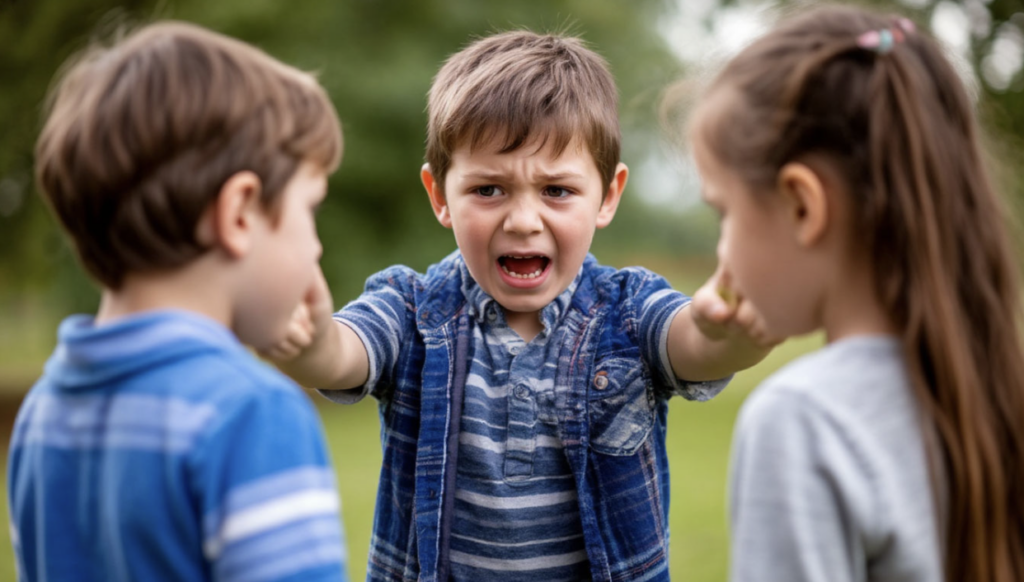
School years should be a time of discovery, friendship and joy. However, for many children, school becomes a place of bullying and humiliation.
The problem of bullying remains one of the most acute in modern education. Parents often overlooked warning signs or do not know how to properly respond to the situation.
It is important to understand: bullying is not just childish pranks or conflicts. This is a serious social problem that can leave a lasting mark on a child’s mental health.
Early identification of signs of bullying and the correct response from adults can prevent serious consequences.
What is bullying
Bullying is the systematic, purposeful persecution of one person by another or a group of people.
This is not just a conflict or quarrel – it is form of aggressionwhich can have serious psychological consequences.
According to a study by D. Olweus (a recognized expert in the field of bullying), bullying affects up to 20-30% of schoolchildren in different countries.
And modern research suggests that the consequences of bullying can manifest themselves even years after bullying.
Bullying can come in many forms, from physical violence to cyberbullying. Each form requires special approach to solving the problem.

Signs of bullying
How can a parent notice that a child is being bullied?
Early detection of signs bullying is the key to successfully solving the problem.
Main features:
- Sudden change in behavior: isolation, irritability, tearfulness;
- Refusal to attend school, complaints of poor health;
- Deterioration in academic performance, loss of interest in studying;
- Damage to clothing, missing items
- Problems with sleep, appetite, frequent headaches;
- Social isolation, lack of friends.
Research shows that about 40% of children who are bullied don’t talk about it parents.
Therefore, it is important to be attentive to changes in the child’s behavior.
How to help a child
Bullying is a difficult experience for both the child and the parent. At this moment, there is a rage inside the child a whole range of difficult emotions: fear, loneliness, helplessness and anger.
It is important to notice these feelings in time and help cope with them.
What to do right now:
- Speak out your feelings. Help your child name what he is experiencing: “Are you offended? Hurt? Scary?” Make it clear that any emotions are normal and can be discussed.
- Be on your child’s side:
-
- “It’s not your fault”;
-
- “You don’t deserve to be treated like this.”
- Support self-esteem:
-
- “You are wonderful and interesting. I love you very much”;
- “Bullying doesn’t happen because there’s something wrong with you. People sometimes act cruelly because of their own problems.”
- Create a support:
-
- “You can always leave from where you are not valued”;
-
- “You have us – those who love and support you.”
- Take action:
- See a coach for support;
- Notify school administration.
It is important to remember: when bullying cannot be negotiated – it need to stop.
For Parents:
- Give yourself time to think about the situation;
- Remember: you are not to blame for what happened;
- Don’t be shy to ask for help.
With timely intervention and proper support, 70% of bullying cases are successfully resolved in the first two weeks.
However, it is important to understand that even if the situation seems resolved, the child’s internal experiences may require extra work.
This is where professional support comes in. A coach helps create a safe space where a child can talk openly about his feelings and learn to cope more effectively with difficulties.
When you need specialist help
Professional help is necessary in certain situations.
Statistics shows: without timely intervention the consequences of bullying can be irreversible.
Specialists help:
- Process traumatic experiences;
- Restore self-esteem;
- Teach effective defense strategies;
- Develop social skills;
- Coping with post-traumatic experiences.
When to see a coach:
- The child is in a state of prolonged stress;
- Signs of depression or anxiety disorder have appeared;
- The child’s health is deteriorating;
- School performance has declined significantly;
- The child shows aggression or withdrawal;
- Attempts to solve the problem on your own do not bring results.
Research confirms: timely contact with a specialist reduces the risk of developing post-traumatic stress disorder by 60%.
The problem of bullying remains one of the most painful in modern education. But bullying is not a sentence, but a situation that can and should be resolved.
Timely intervention and the right support help not only stop bullying, but also turn negative experiences into opportunities for growth.
At Animago we use evidence-based cognitive behavioral coaching to help children:
- Process traumatic experiences;
- Develop resistance to stress;
- Learn to protect personal boundaries.
Checkup in “Animago” is the first step to understanding the situation. In 60 minutes we:
- We will diagnose the child’s condition;
- We will identify the causes of difficulties;
- We will help you establish contact with a specialist;
- We will form a clear action plan.
What you will get:
- Expert assessment of the situation;
- Understanding the true causes of problems;
- Specific recommendations for further actions;
- The opportunity to see how our format works.
Important advantage Our approach is that we do not look for those to blame and do not blame parents. We consider each case individually, taking into account the characteristics of the child and family.
The action plan that you will receive after Checkup will become your reliable guide. It will help structure further steps and choose the optimal path to solve the problem.
Remember: caring for a child’s psychological health is an investment in his future.
At Animago we create a safe space where every child can receive necessary support and learn to cope with life’s difficulties.
Frequently Asked Questions
Can bullying go away on its own?
No, bullying almost never stops without adult intervention.
Research shows that ignoring a problem can lead to its aggravation and the development of serious psychological trauma in a child.
Why does this happen:
- Aggressors feel impunity;
- The victim experiences constant stress;
- The situation may escalate into more serious forms of bullying;
- The child develops negative experiences that affect his future life.
Required actions:
- Immediate intervention in the situation;
- Appeal to the school administration;
- Working with a coach;
- Organization of child support.
How to teach a child to defend himself from bullies?
Physical aggression does not solve the problem of bullying and can make the situation worse. The CBT approach offers effective alternatives.
Safe protection strategies:
- Techniques for confident behavior;
- Verbal self-defense skills;
- Ability to ask for help;
- Ways to maintain emotional balance.
Working methods:
- Correction of negative thoughts;
- Development of communication skills;
- Setting healthy boundaries;
- Mastering relaxation techniques.
How can you tell if a child is being bullied?
Alarm signals:
- Frequent conflicts with peers;
- Demonstrative superiority over others;
- Lack of empathy for the feelings of others;
- Manipulative behavior;
- Cruelty to the weaker;
- Problems with anger control.
What to do:
- Have a frank conversation with the child;
- Discuss the rules of respectful behavior;
- Contact a school coach;
- Develop a child’s empathy and social skills;
- Analyze the family atmosphere.
If you notice warning signs, don’t blame your child. It is better to seek professional help to understand the reasons for this behavior and correct it.
Try Animago
Animago is an online team of highly qualified coachs who work with children and coach parents using evidence-based methods. For children ages 3–7, Animago coachs meet as animated characters over live video.
We help with common childhood challenges — fears, anxiety, low confidence, shyness, and more — and support healthier parent-child relationships. The Animago team has already helped more than 2,500 children build resilience!
Want to try it?

See also
Не удалось встроить форму оплаты. Откройте оплату в новом окне:
Перейти к оплатеМы используем файлы cookies для улучшения работы сайта и анализа трафика. Продолжая использовать сайт, вы соглашаетесь с нашей политикой конфиденциальности.