When a Child Hits a Parent: Causes and What to Do
When a Child Hits a Parent: Causes and What to Do
Updated: April 2026.
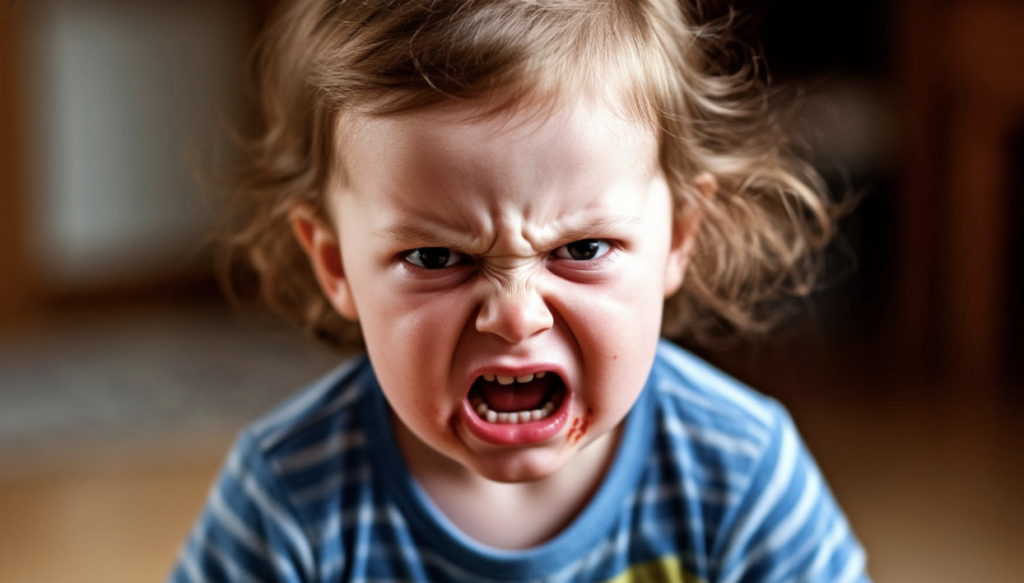
Rule “Stop”: algorithm of actions in the moment of aggression
- Interception of the hand. Gently stop the action without causing pain. The goal: to interrupt the process, not to punish.
- Eye to eye. Sit down at the child’s level and make eye contact. This helps regain focus and reduces stress levels.
- Short verbal formula. Say clearly and calmly: “I will not allow myself to be beaten. People are hurting.” Avoid long lectures during times of strong emotions; the child will not perceive them.
- Stay with the child. Stop it every time, repeating the same actions.
Why does a child hit his parents: the main reasons for aggressive behavior
Aggression in children is rarely causeless. Let’s look at the key factors that provoke this behavior.
Physiological factors and age norms
- Immaturity of the prefrontal cortex. Until the age of 5–6 years, a child’s brain does not yet know how to effectively inhibit impulses. This explains the outbursts of anger and uncontrollable actions.
- Development crises. The crisis of one year and the crisis of three years are associated with separation and testing of boundaries. The child learns to defend his “I”.
- Sensory overload. Fatigue, hunger, noise or bright light can cause stress, which results in aggression.
Psychological and external triggers
- Checking boundaries. The child tests: “What will happen if I do this?” This is part of the socialization process.
- Silence of emotions. The baby does not know how to say “I’m angry” or “I’m offended,” so he expresses feelings through actions.
- Mirror neurons. Children copy behavior patterns that they see at home, in kindergarten, or in cartoons.
Scientific fact: According to research from the American Psychological Association (APA), aggression in children under 5 years of age is often associated with the development of emotional intelligence. The ability to recognize and name emotions reduces the frequency of angry outbursts by 30–40%.
/* Unified adaptive Animago table style */
.animago-diagnosis-table {
width: 100% !important;
border-collapse: collapse;
table-layout: fixed; /* Fixation to prevent flying off the screen */
margin: 20px 0;
font-family: sans-serif;
/* Hyphenations according to the rules of the Russian language */
-webkit-hyphens: auto;
-ms-hyphens: auto;
hyphens: auto;
}
.animago-diagnosis-table td {
border: 1px solid #dee2e6;
padding: 12px 8px;
vertical-align: top;
font-size: 14px;
line-height: 1.4;
overflow-wrap: break-word;
word-wrap: break-word;
}
/* Title design (first line) */
.animago-diagnosis-table tr:first-child {
background-color: #f8f9fa;
font-weight: bold;
text-align: center;
}
/* Selecting the first column (Feature) */
.animago-diagnosis-table td:first-child {
background-color: #fdfdfd;
font-weight: 600;
width: 22%; /* Width for comfortable reading of categories */
}
/* Styles for the “Alarm” line (highlighted) */
.animago-row-warning {
background-color: #fff5f5; /* Slight reddish tint */
}
/* Settings for mobile screens */
@media (max-width: 767px) {
.animago-diagnosis-table td {
font-size: 11px;
padding: 8px 4px;
}
}
| Sign | Beat frequency | Reaction to the ban | Presence of self-injury |
| Norm (age characteristics) | Occasionally, during stress or fatigue | Gets angry but calms down after 5–10 minutes | Absent or isolated cases |
| Anxiety (a reason to consult a specialist) | Regularly, for no apparent reason | Aggression intensifies, turns into hysteria | The child hits himself, bites, scratches |
How to stop a child from hitting their parents: step-by-step instructions and practical tips
Strategies depend on the age of the child. Let’s look at approaches for different stages of development.
Strategies for Toddlers (1-3 Years): Containing
- The Tiger Embrace method. If the child accepts tactility, gently hold him until he calms down. Hugs give you a feeling of security.
- Voicing feelings. Help your child name emotions: “You’re angry because I didn’t give you candy. This is normal, but you can’t hit him.”
Strategies for Preschoolers (4–6 Years): Agreement and Consequences
- Rule “Hands are not for fighting.” Clearly state the prohibition against aggression and explain why it is important.
- Time-out (“Calm Corner”). Not as a punishment, but as a way to cool down. Invite your child to sit in a quiet place with his favorite toy.
- Logical consequences. If your child hits someone, offer to apologize or help the victim.
Working with schoolchildren: analysis and alternatives
- Conversation in quiet time. Discuss the situation without blaming: “What made you angry? How could you have done anything differently?
- Finding alternative ways to release anger. Offer options: beat a pillow, tear paper, jump.
Parental mistakes: what not to do if a child hits his mother
The wrong reaction can make the problem worse. Avoid the following:
- Physical punishment. Fighting back destroys trust and legalizes violence: the child learns that “power is everything.”
- Emotional abuse and neglect. The phrases “You are bad” or boycott traumatize the psyche and increase aggression.
- Inconsistency. If today you laugh at a blow and tomorrow you scold, the child loses his bearings.
Prevention of aggressive behavior: how to prevent a child from hitting his mother
Prevention reduces the frequency of violent outbursts and strengthens emotional bonds. It helps the child learn emotional regulation right away, and not at the time of conflict.
Games to release aggression
- “Pillow Fight” (according to the rules: only on a signal and with a stop on command).
- “Chopping Wood” (imitation of blows with the sound “Wow!” – helps relieve tension).
- “Scream Cup” (the child may scream loudly into the glass if he is angry).
- “Draw your anger and tear it up” (visualization of emotions reduces their intensity).
Reducing background stress and daily routine
Maintaining a routine is the key to emotional stability:
- Dream. Children 3–6 years old should sleep 10–12 hours a day.
- Nutrition. Avoid excess sugar and caffeine, they provoke hyperactivity.
- Gadgets. Limit screen time to 1 hour per day for preschoolers.
Checklist: emotional climate in the family.
Does the child have a stable daily routine?
Is there frequent shouting or harsh intonation in the family?
Is physical contact (hugs, stroking) enough?
Does the child have “his own” safe space?
When specialist help is needed: a coach or neurologist in case of child aggression
Contact a specialist if you notice the following “red flags”:
- Aggression is accompanied by cruelty to animals.
- The child causes damage to himself (auto-aggression).
- Lack of empathy and reaction to the pain of another after 4–5 years.
- Regression of skills against the background of aggression (for example, the child stopped speaking in phrases).
Typical situations with parents: experience in dealing with aggression when a child hits his mother
Case 1: “Three-year crisis and fights in the garden”
Problem. The mother of a three-year-old boy noticed that her son began to beat her at home and other children in the kindergarten. This happened especially often after returning from the institution. The child was overexcited, capricious and reacted with aggression to any requests.
What did they do? The family turned to a child coach, who recommended:
- introduce a “calm corner” – a quiet place with pillows and soft toys where the child could go when angry;
- voice the child’s feelings: “You’re angry because you didn’t want to leave kindergarten. This is normal, but you can’t hit him”;
- play “pillow fight” according to the rules – only on a signal and with a stop on command.
Result. After a month, the number of aggressive outbursts decreased. The child began to use the “corner” on his own, and instead of hitting him he began to say: “I’m angry!” or go hit a pillow.
Case 2: “The child beat me out of overexcitement”
Problem. A two-year-old girl began hitting her mother in the face when she was tired or overexcited. For example, after a long day on the playground or at a party.
What did they do? Parents:
- adjusted the daily routine: introduced mandatory daytime naps and early bedtimes;
- limited screen time to 20 minutes per day;
- added sensory games to relieve stress: pouring cereals, modeling dough, playing with water;
- Before going to bed, they performed a “calming ritual”: reading books and hugging.
Result. Within two weeks the child became calmer. Instead of aggression, she began to come up to her mother and say, “I’m tired,” or climb into her lap for a hug.
Case 3: “Only dad hits”
Problem. A five-year-old child only hit his father, especially when he tried to set rules: “It’s time to put away the toys,” “Stop watching cartoons.”
What did they do? The parents agreed:
- act uniformly: both voiced the same boundaries;
- Dad began to play more active games with the child (“catch-up”, “wrestling”), where he could safely burn off energy.
Result. After three weeks, the child stopped hitting his dad. He learned to say: “I don’t want to clean!” and agree: “Can we play for five more minutes?”
Why is it important to notice?
There can be many reasons behind aggressive behavior: stress, inability to express emotions, or problems with self-regulation. Inaction will reinforce violence as the norm, worsen family relationships and affect the child’s self-esteem.
It is important to remain calm, explain the inadmissibility of hitting and teach how to express feelings in words. To identify causes and receive individual recommendations sign up for a psychological check-up at Animago.
Record for checkup
Questions:
Can cartoons provoke fights with your mother?
Yes, they can. Through mirror neurons, children copy what they see: if in a cartoon the characters solve problems with their fists, the child can adopt this model.
What to do: discuss with your child: “Why did the hero hit? How could it have been different?”
What to do if grandma allows herself to be beaten “he’s playing,” but mom doesn’t?
The inconsistency of adults confuses the child. How to solve: calmly discuss with your grandmother: “We teach our son that you can’t hit anyone. Let’s play catch-up or fight, there you can push according to the rules”; all adults must voice single rule: “Hands are not for fighting.”
The child only hits his mother in public, why?
This behavior is often associated with:
- attracting attention. In a crowded place, mom reacts faster to a blow than to a request;
- checking boundaries. The child tests: “Will mom say “no” here too?”;
- influence of stress. New places and people cause anxiety that the baby cannot express in words.
State the rules in advance: “In the store we don’t hit mom, but hold hands,” offer an alternative: “If you’re angry, say “I’m angry””; at the moment of the outbreak, calmly take the child to a quiet place and use the “Stop” algorithm.
Try Animago
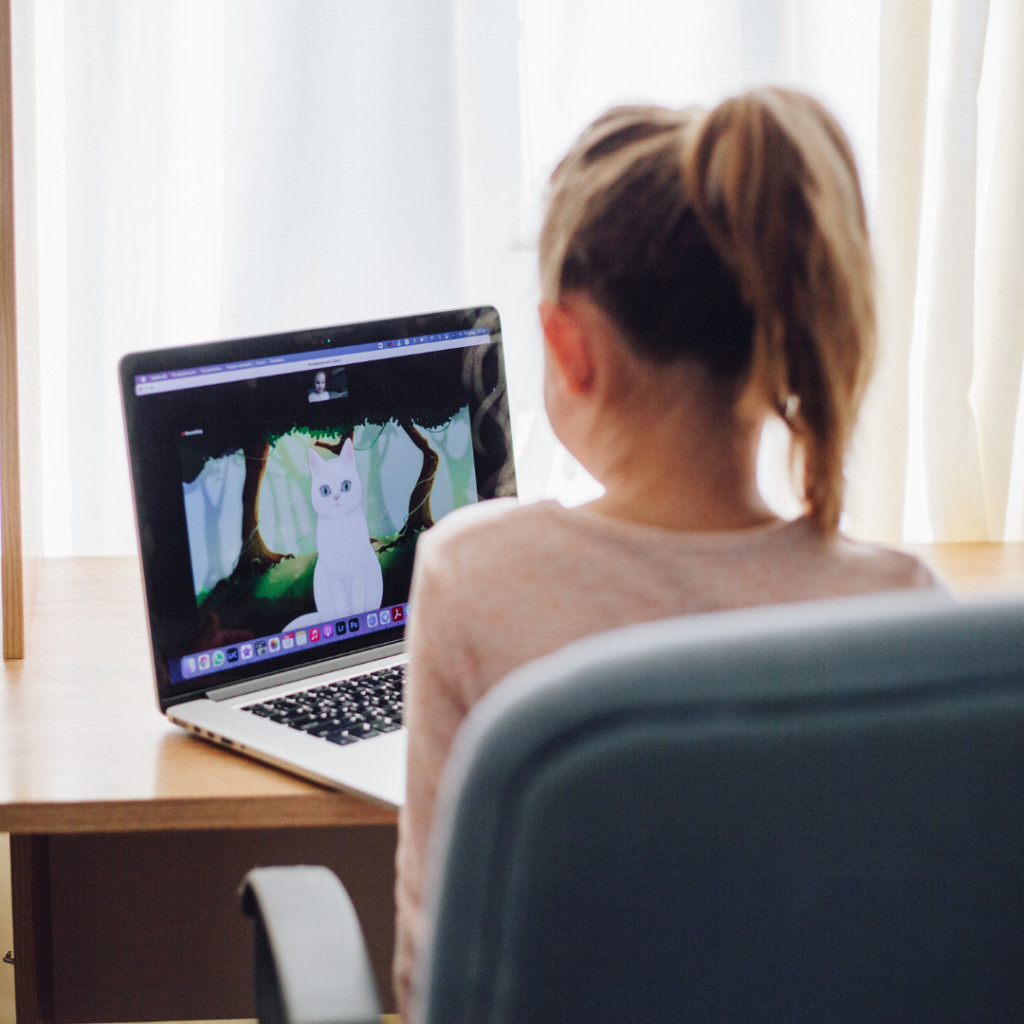
Animago is an online team of highly qualified coachs who work with children and coach parents using evidence-based methods. For children ages 3–7, Animago coachs meet as animated characters over live video.
We help with common childhood challenges — fears, anxiety, low confidence, shyness, and more — and support healthier parent-child relationships. The Animago team has already helped more than 2,500 children build resilience!
Want to try it?
See also
Не удалось встроить форму оплаты. Откройте оплату в новом окне:
Перейти к оплатеМы используем файлы cookies для улучшения работы сайта и анализа трафика. Продолжая использовать сайт, вы соглашаетесь с нашей политикой конфиденциальности.